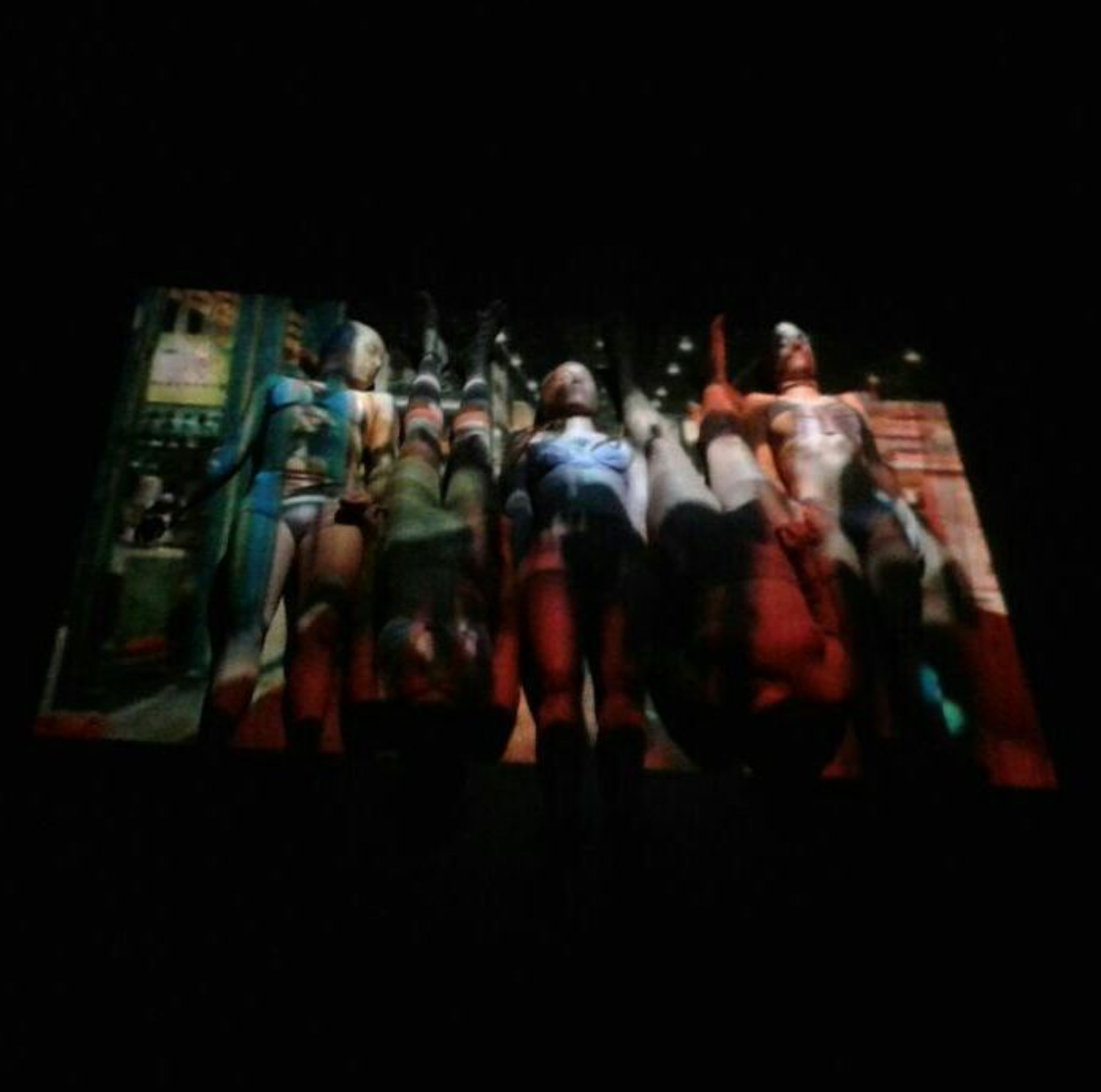
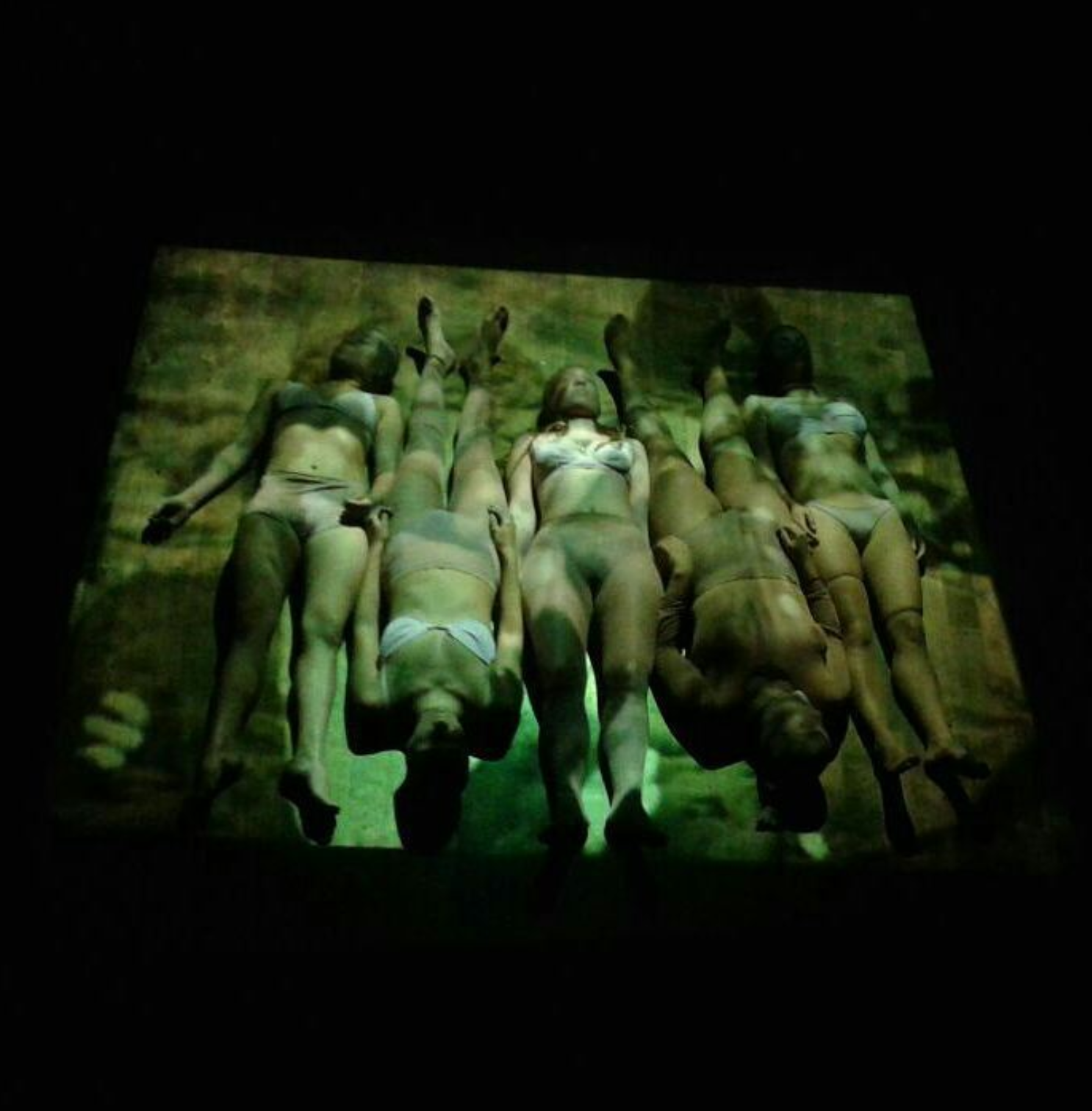
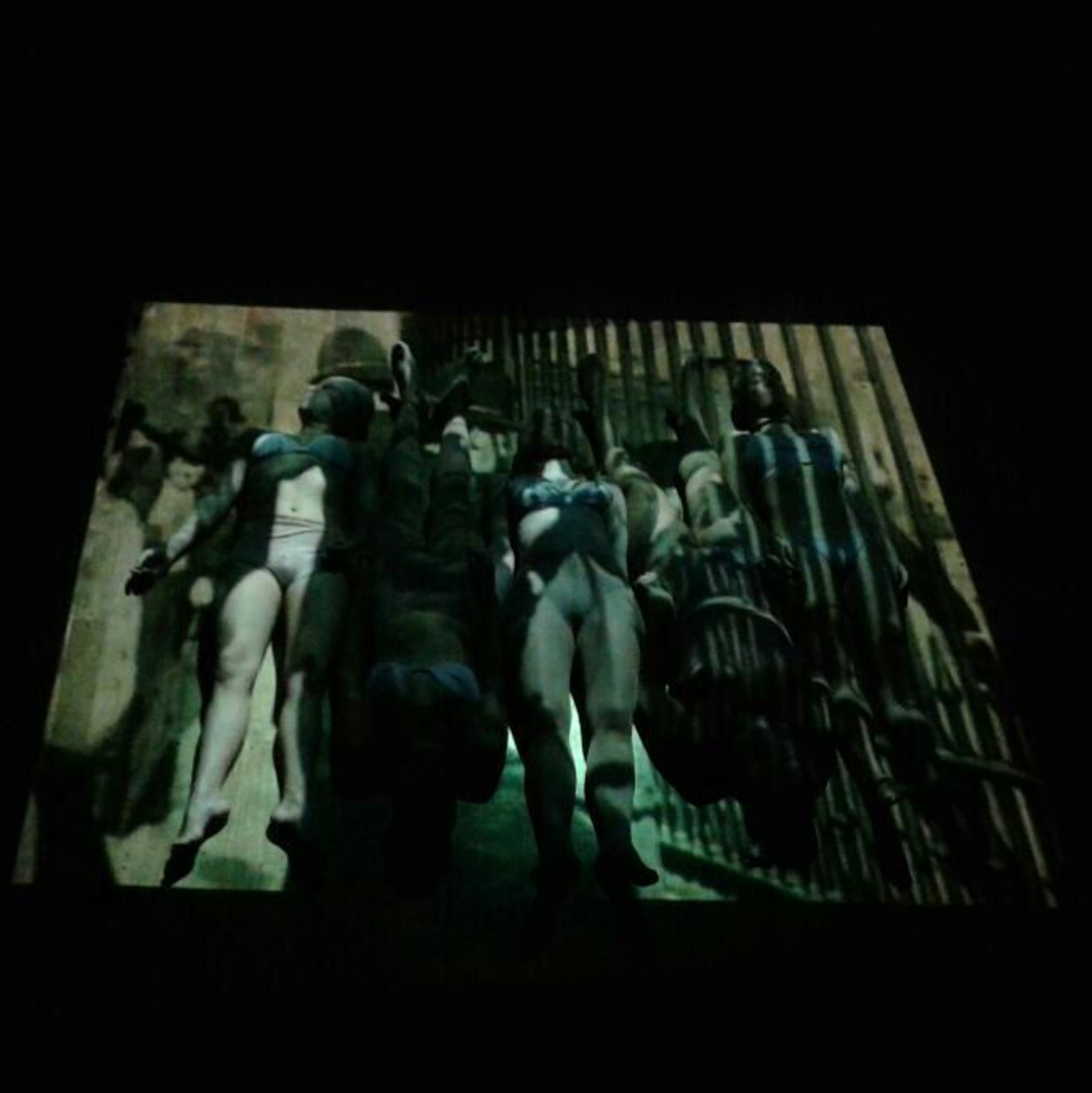
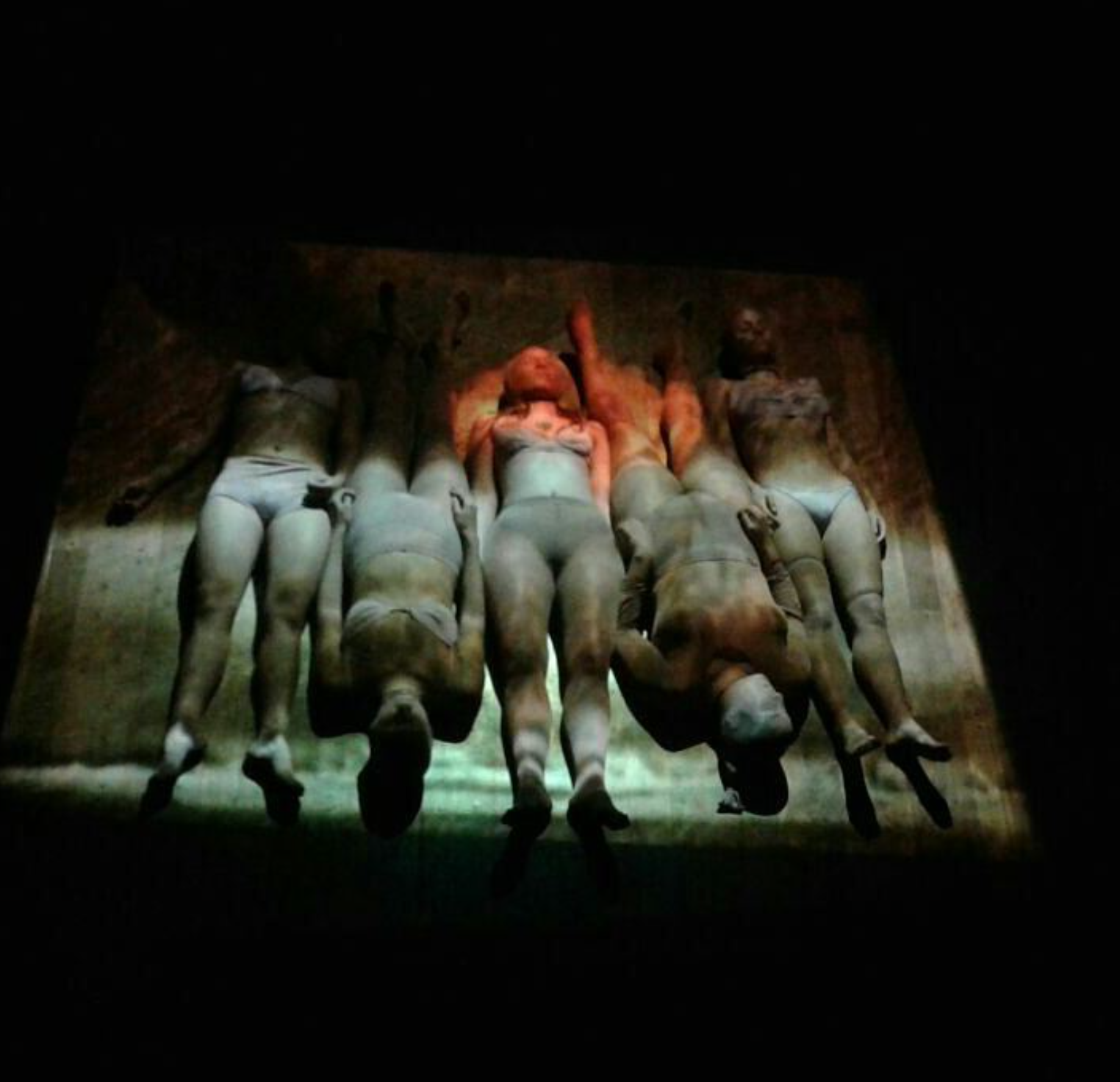
How can the body resist the identities imposed by consumer culture? Fibrous Flesh approaches the body as a surface on which external demands and images leave their marks. Still bodies, arranged in alternating orientations, form a repeated structure. Their apparent interchangeability raises a question about self-definition: what persists of an individual presence when bodies are organised, displayed and consumed through shared expectations?
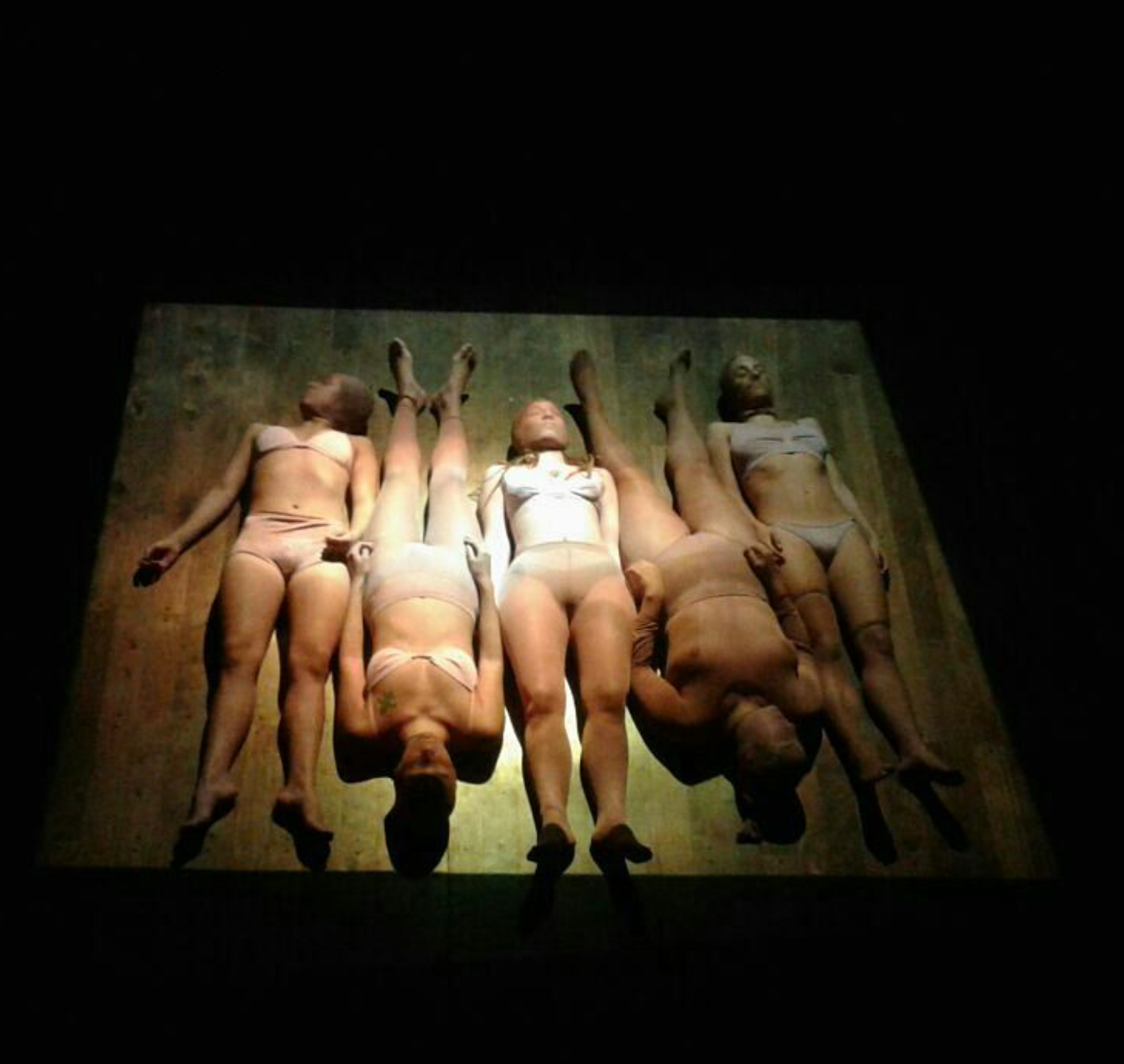
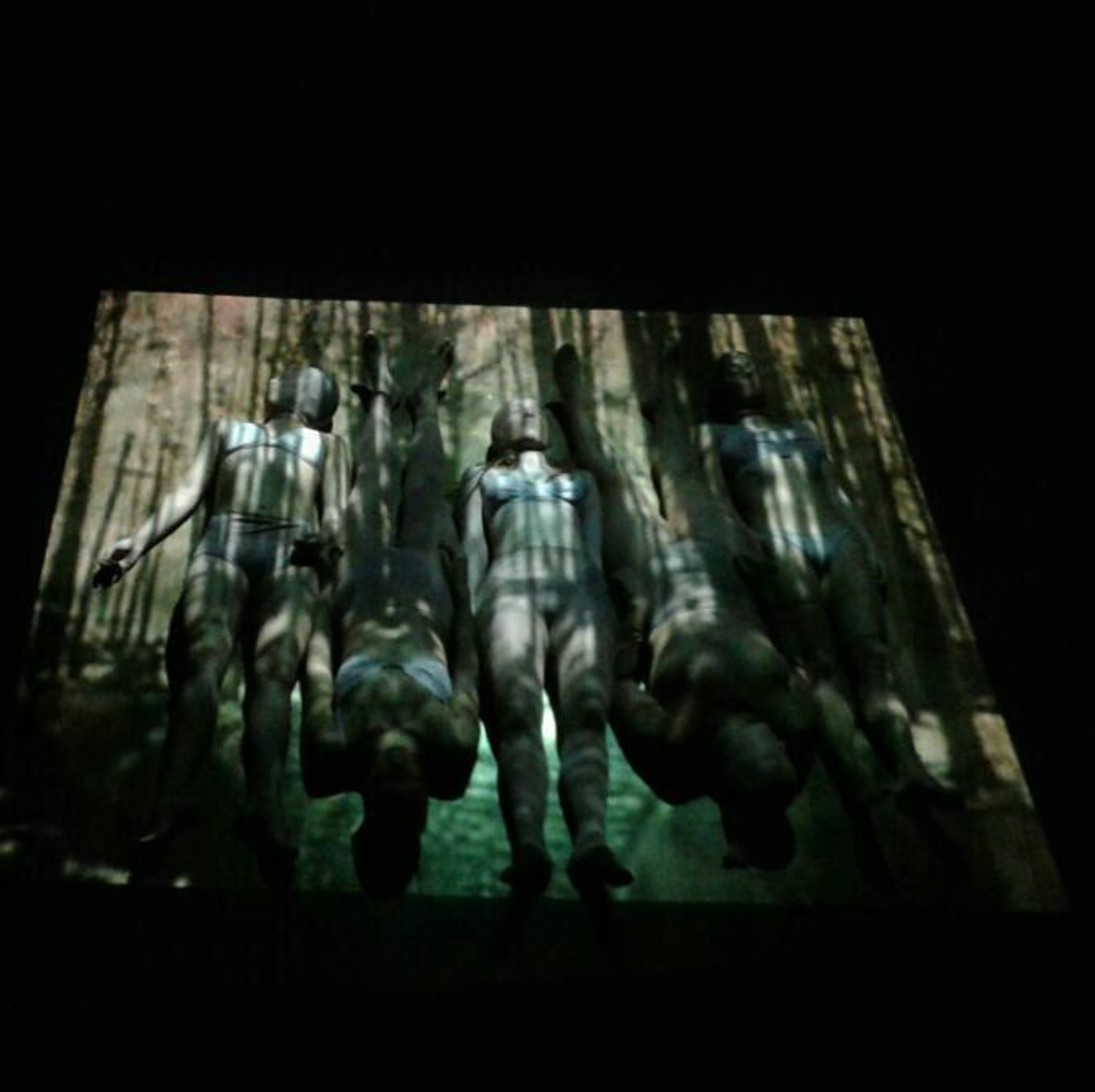
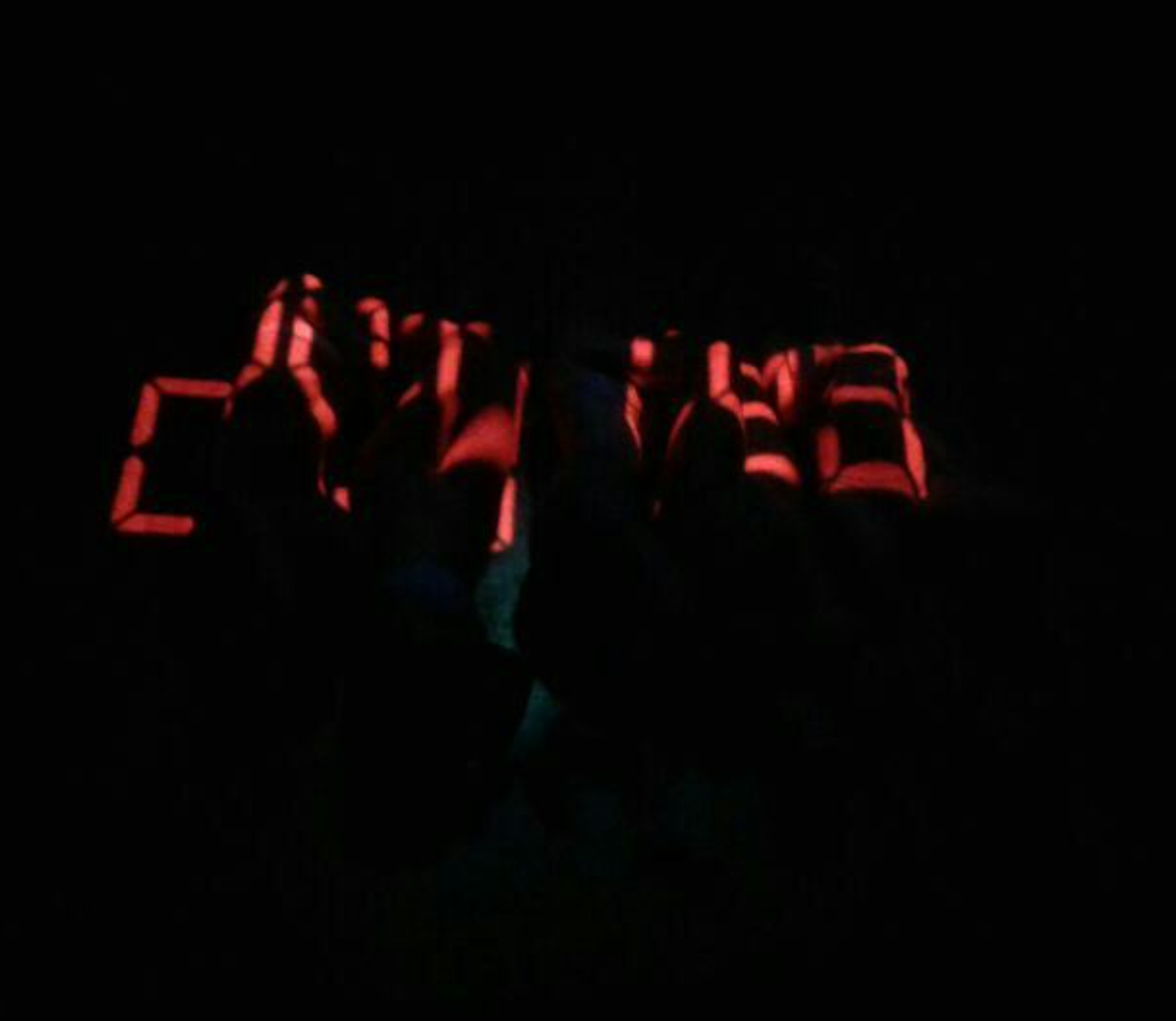
Light and projected imagery pass across the performers’ skin. Repetition and stillness hold the tension between exhaustion and the possibility of withholding participation. The phrase “bite into fibrous flesh and obtain metallic arrows” connects organic vulnerability with the hardness of social conditioning. Flesh becomes a way of thinking about pressures that transform lived experience into prescribed behaviour and desire, while the fibrous suggests a capacity to hold together under strain.
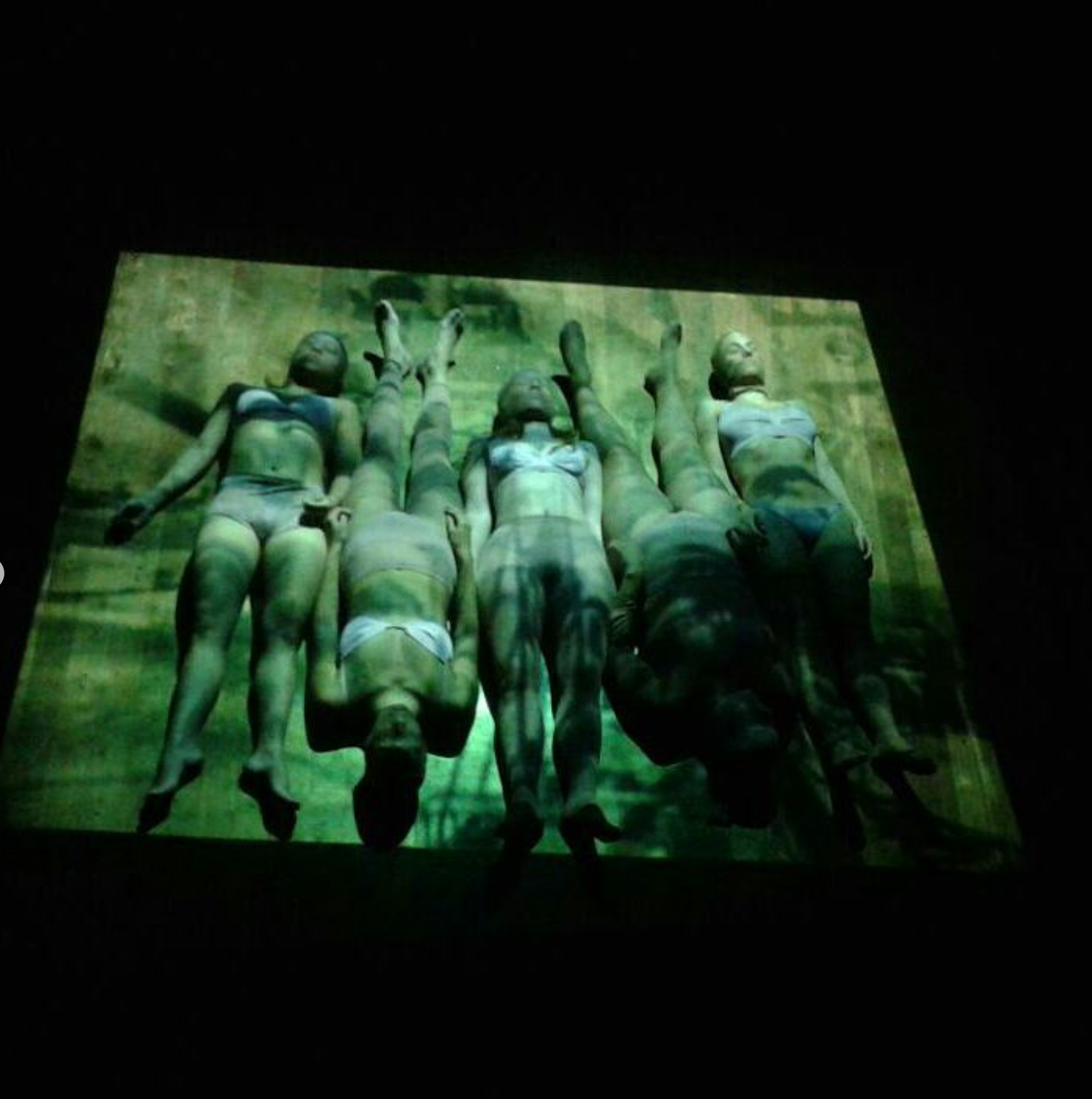
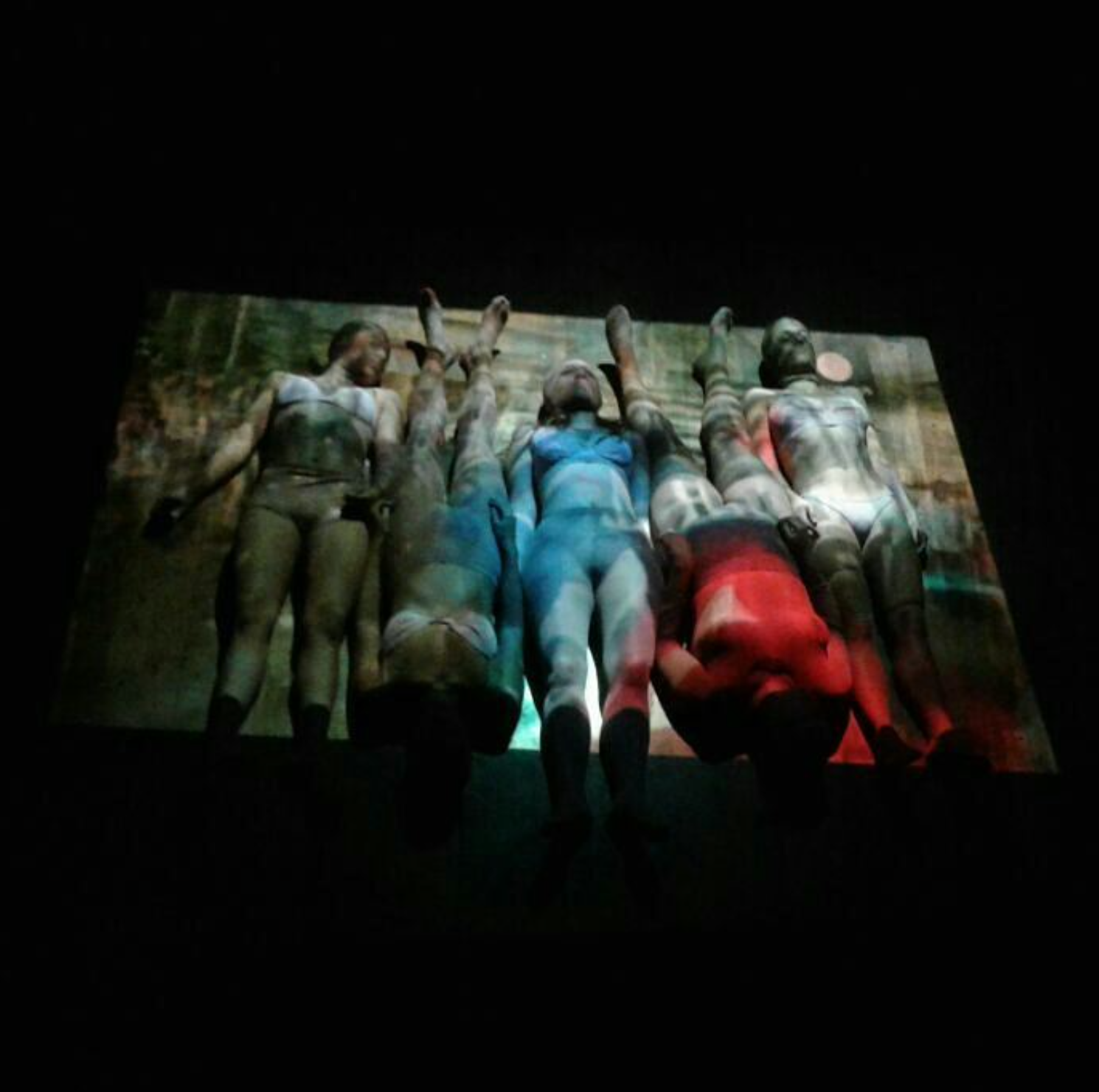
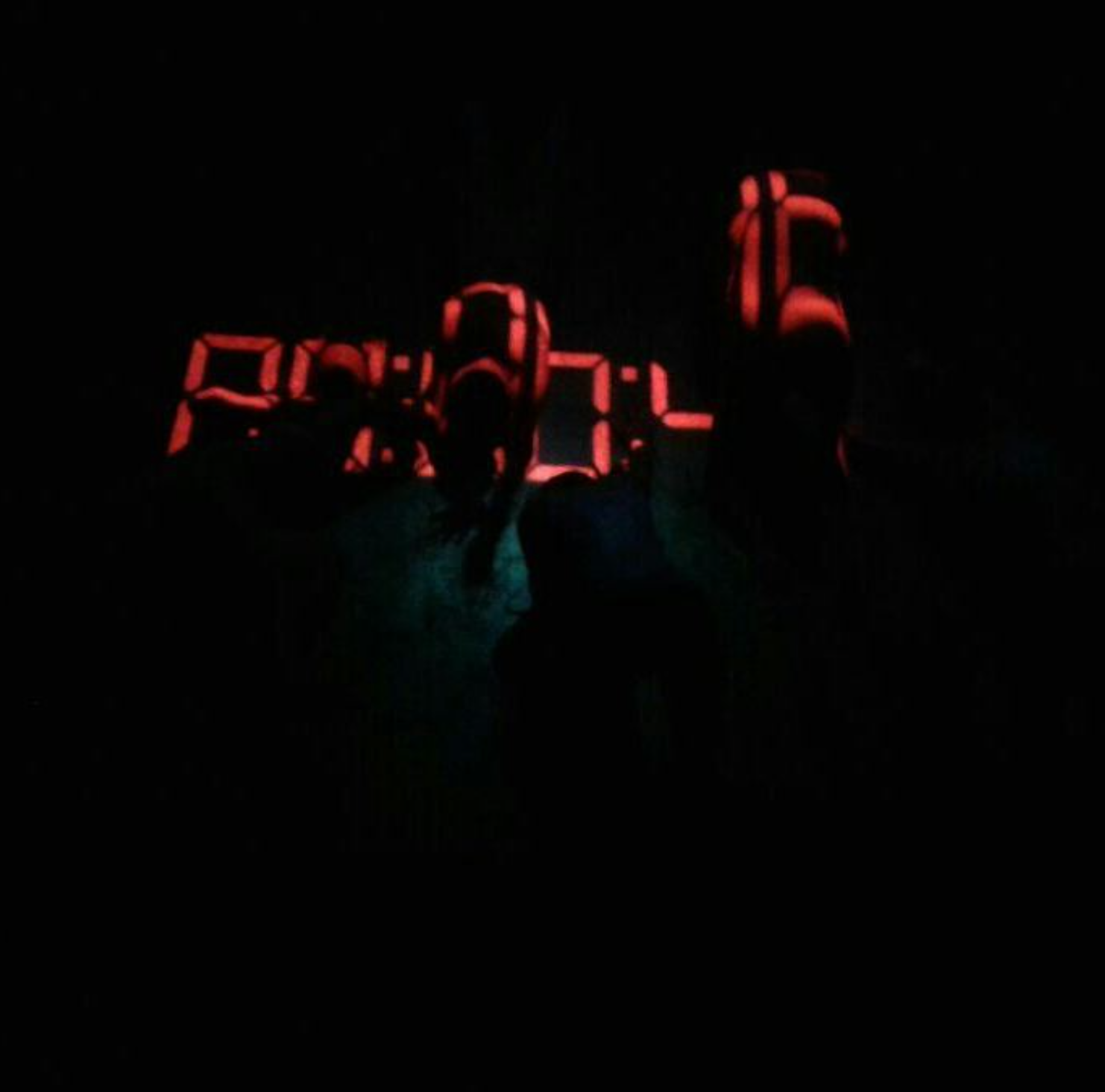
I co-created the work with Angeles Torino, Yoseli Leiva, Lenna Aravena and Jazmin Lopez. Presented at CePiA, the Arts Research Centre in Argentina, in 2017, it brought these questions into a shared performance. The photographic sequence records changes in the projected imagery across the repeated arrangement of bodies. Within that enclosure, the possibility of a fissure allows resistance to remain imaginable: the work leaves bodily identity open to something beyond the images imposed upon it.
Credits
Co-creation: Gina Marin, Angeles Torino, Yoseli Leiva, Lenna Aravena, and Jazmin Lopez
Read more · Research, process and context
About the work
Fibrous Flesh examines the body as a site where consumer culture inscribes its demands, gradually wearing down the capacity for self-definition. Arranged in alternating orientations, the still bodies form a repeated structure, suspended between individual presence and apparent interchangeability. Light and projected imagery pass across their skin, suggesting how externally imposed images shape the experience of inhabiting a body. Stillness acquires a double significance: it evokes the exhaustion of bodies consumed by everyday expectations while holding open the possibility of withholding participation.
The phrase “bite into fibrous flesh and obtain metallic arrows” condenses the work’s tension between organic vulnerability and the hardness of social conditioning. Flesh becomes a material from which something rigid, directional, and potentially violent emerges, suggesting a system that transforms lived experience into prescribed forms of behaviour and desire. Yet the fibrous also implies endurance: tissue holds together under pressure. Within this enclosure, the possibility of a fissure—a narrow opening through which light might enter—allows resistance to remain imaginable. The work asks what persists of bodily identity when the self is repeatedly organised, displayed, and consumed.
Presented at CePiA, the Arts Research Centre, Argentina, in 2017.