What does it mean to take a step? Footprints begins with the feet as the body’s point of contact with the material world. Developed in the Visual Narratives Laboratory, the project asks how the weight and resistance of a physical gesture relate to the apparent lightness of digital experience. A sequence of photographic actions became the starting point for drawings and digital variations.
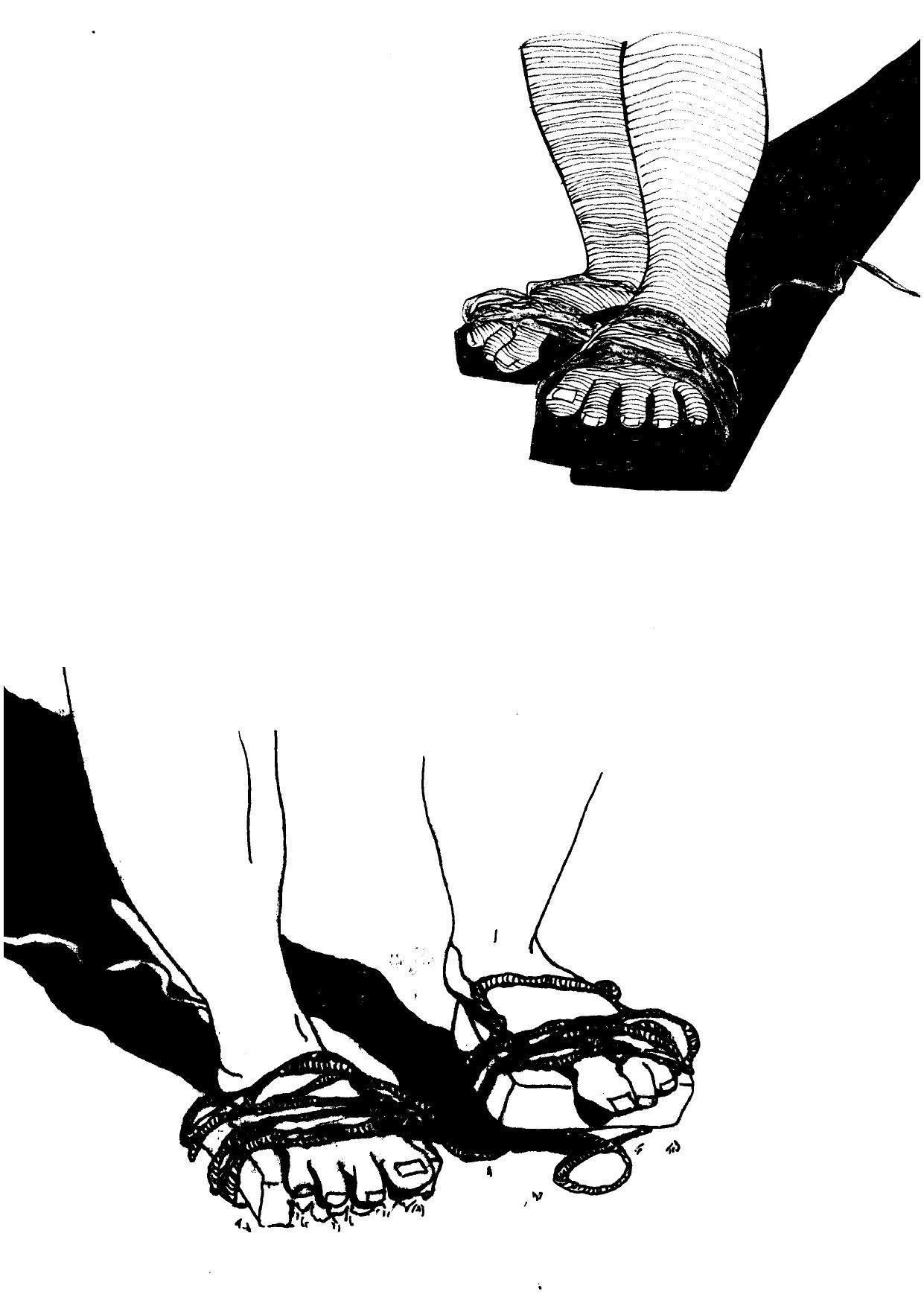
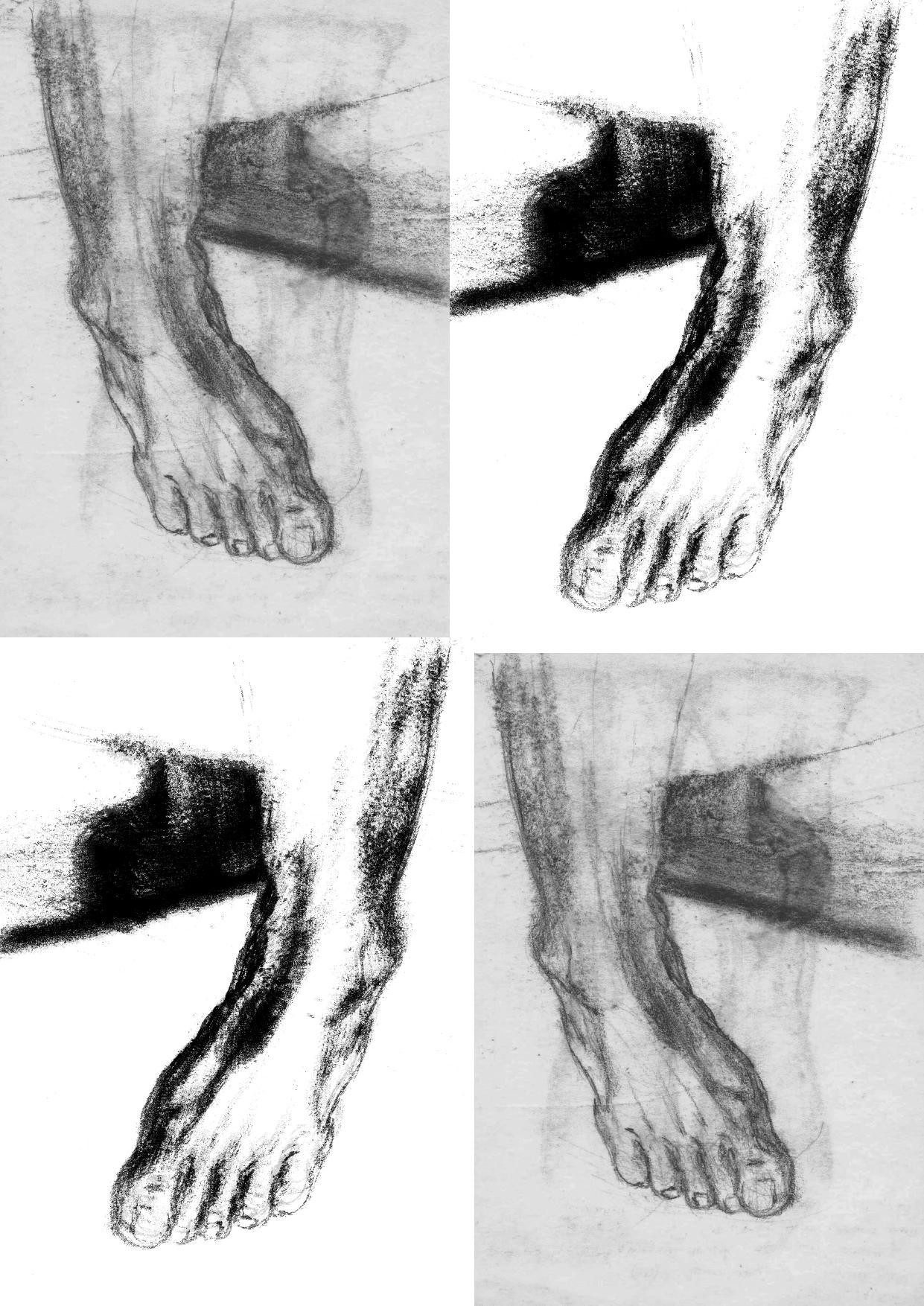
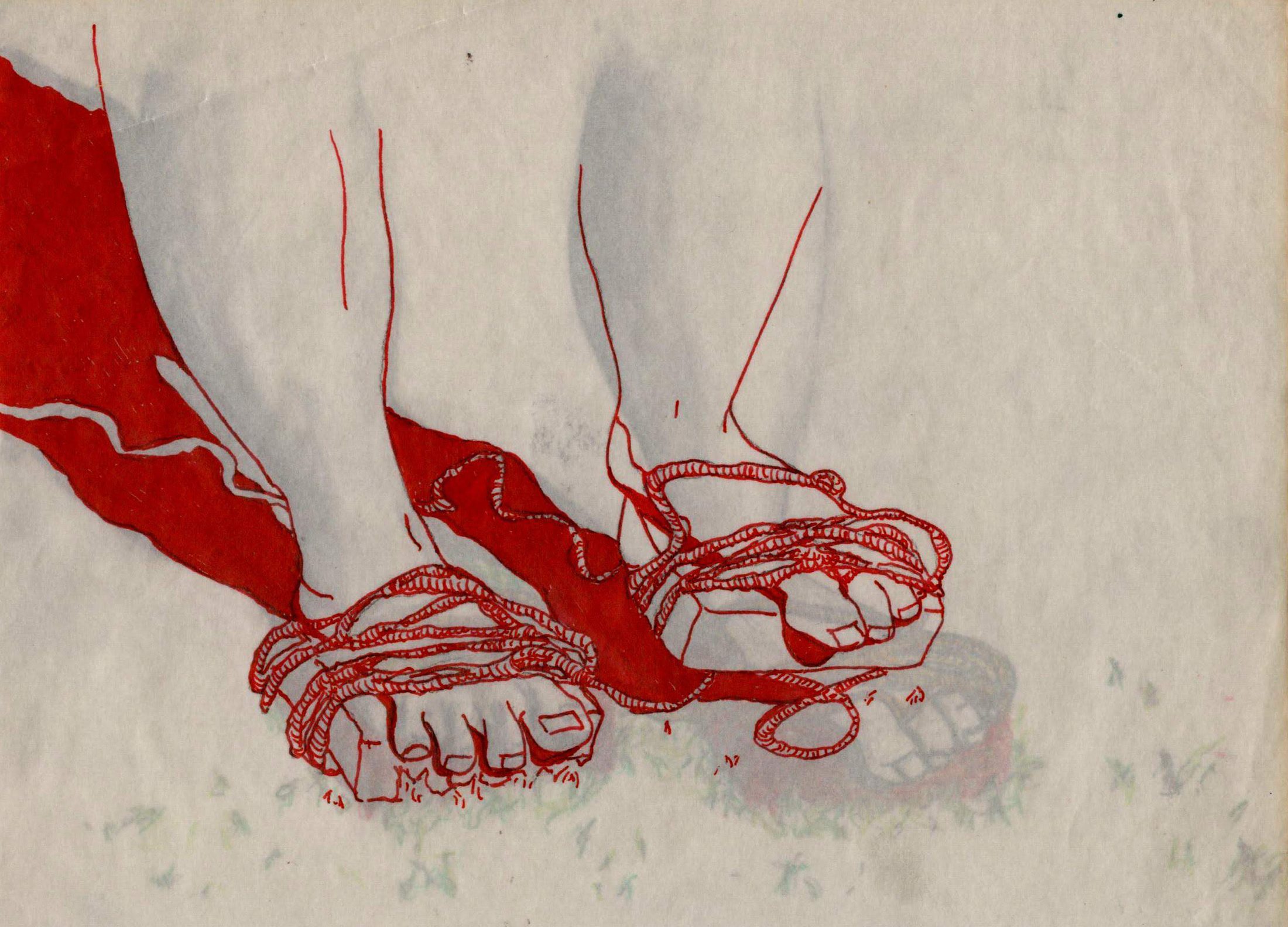
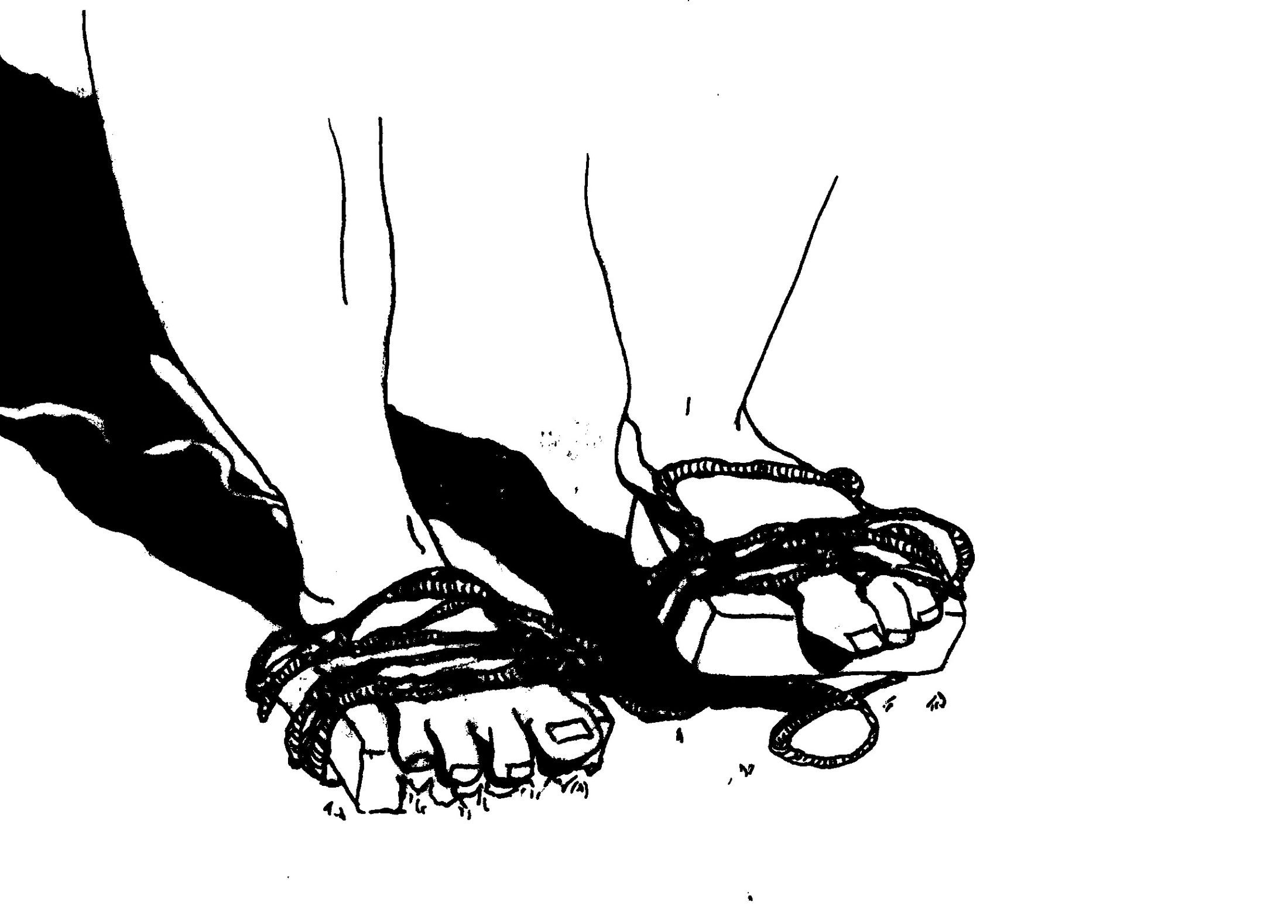
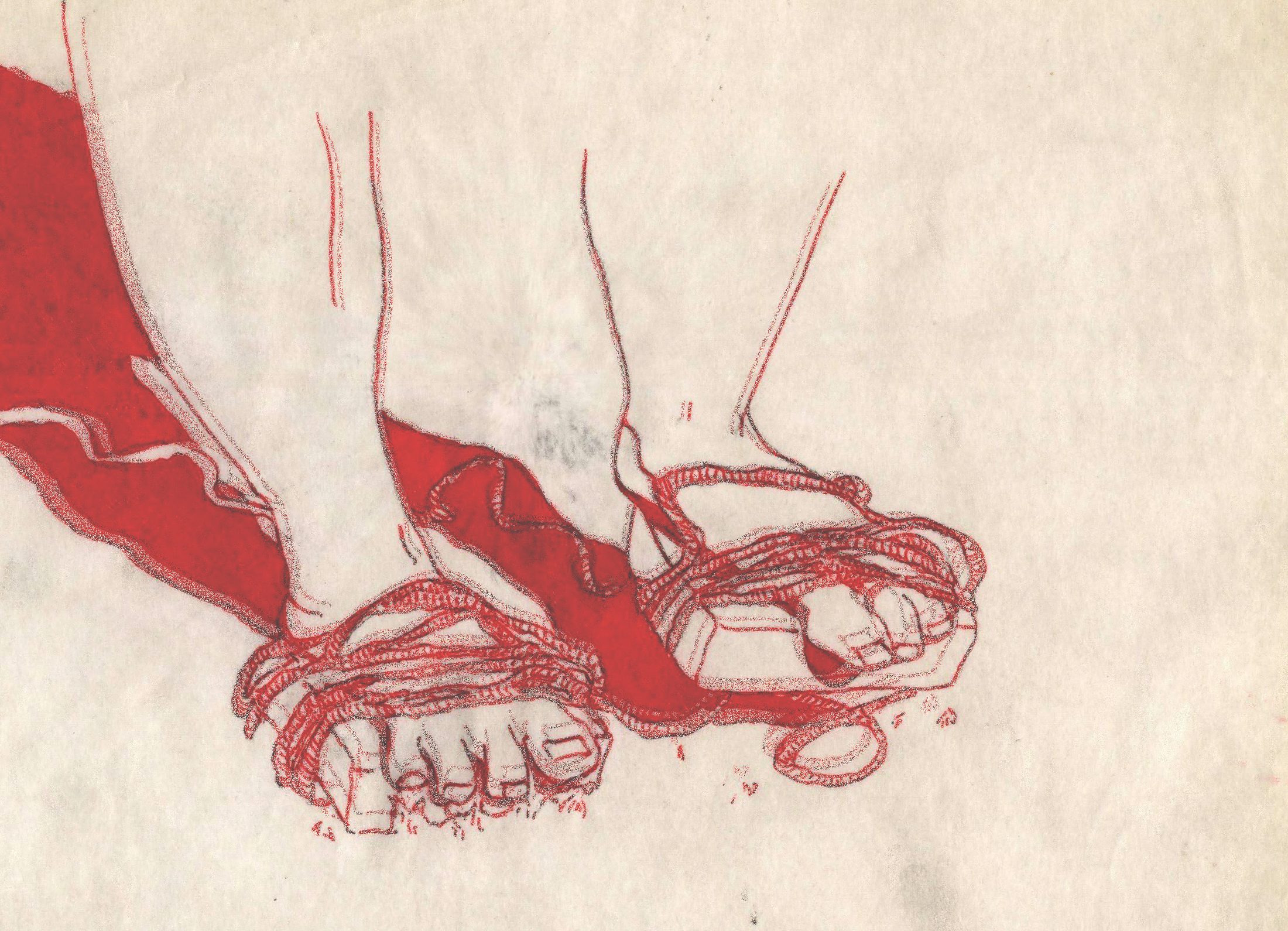
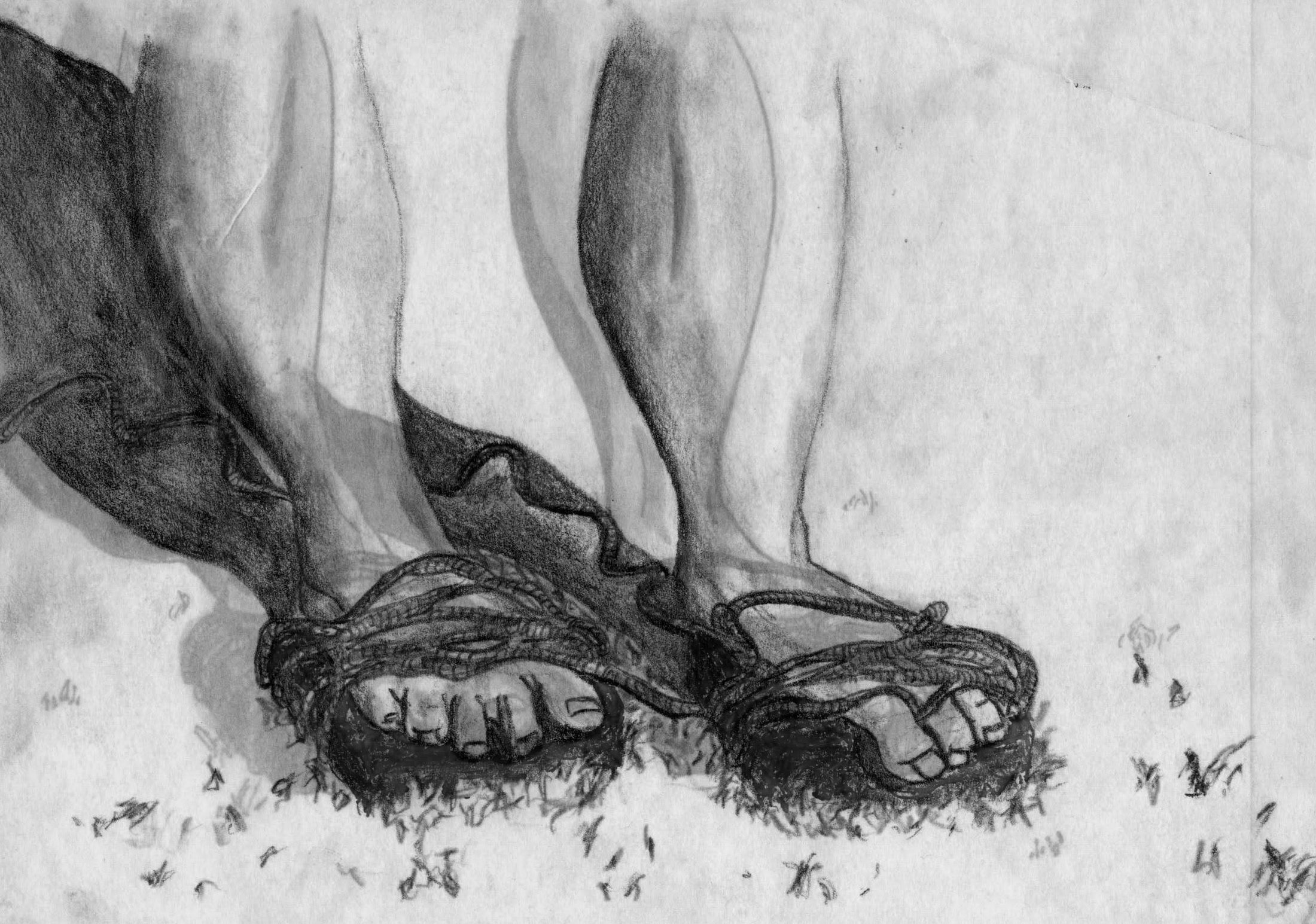
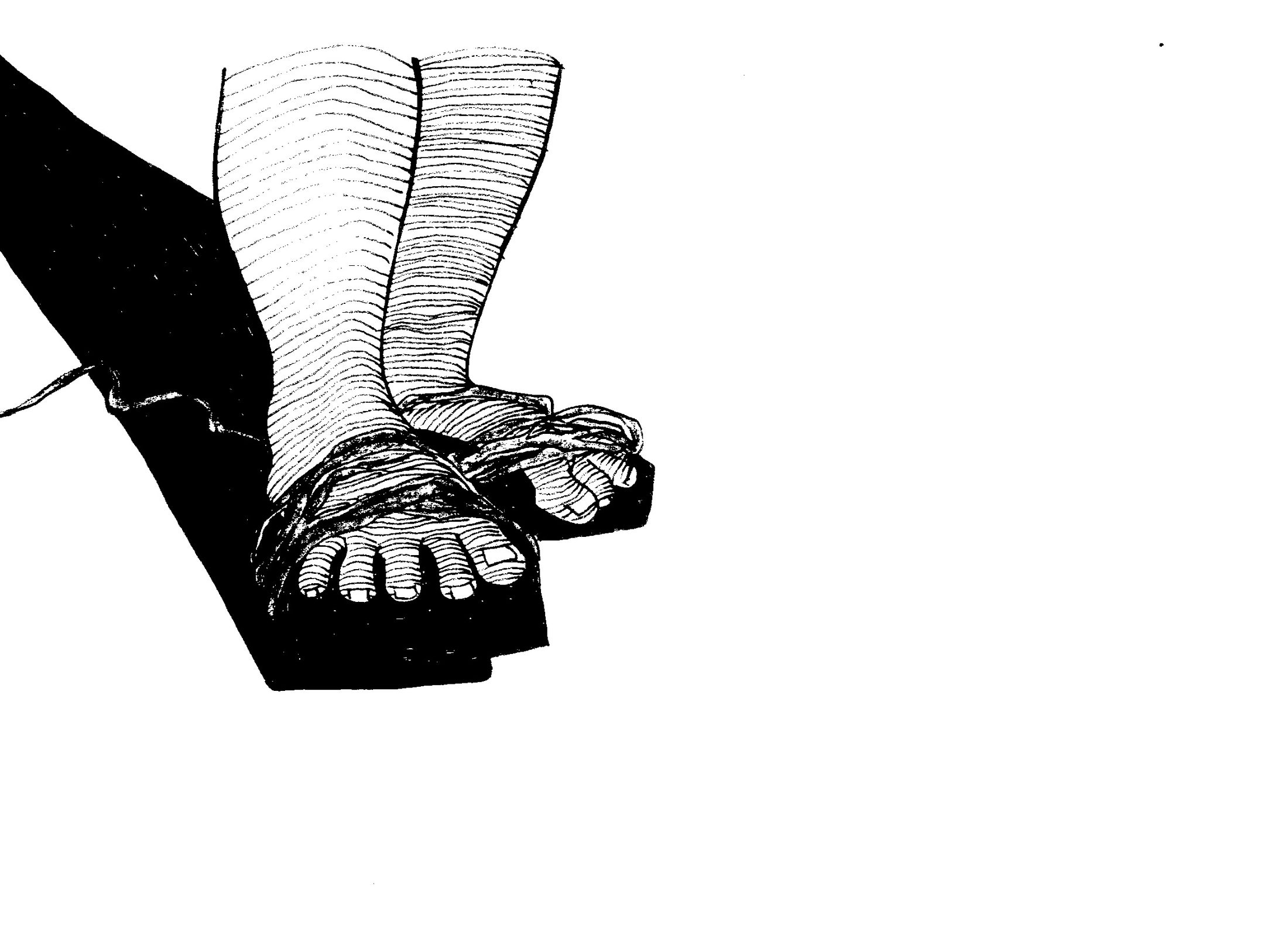
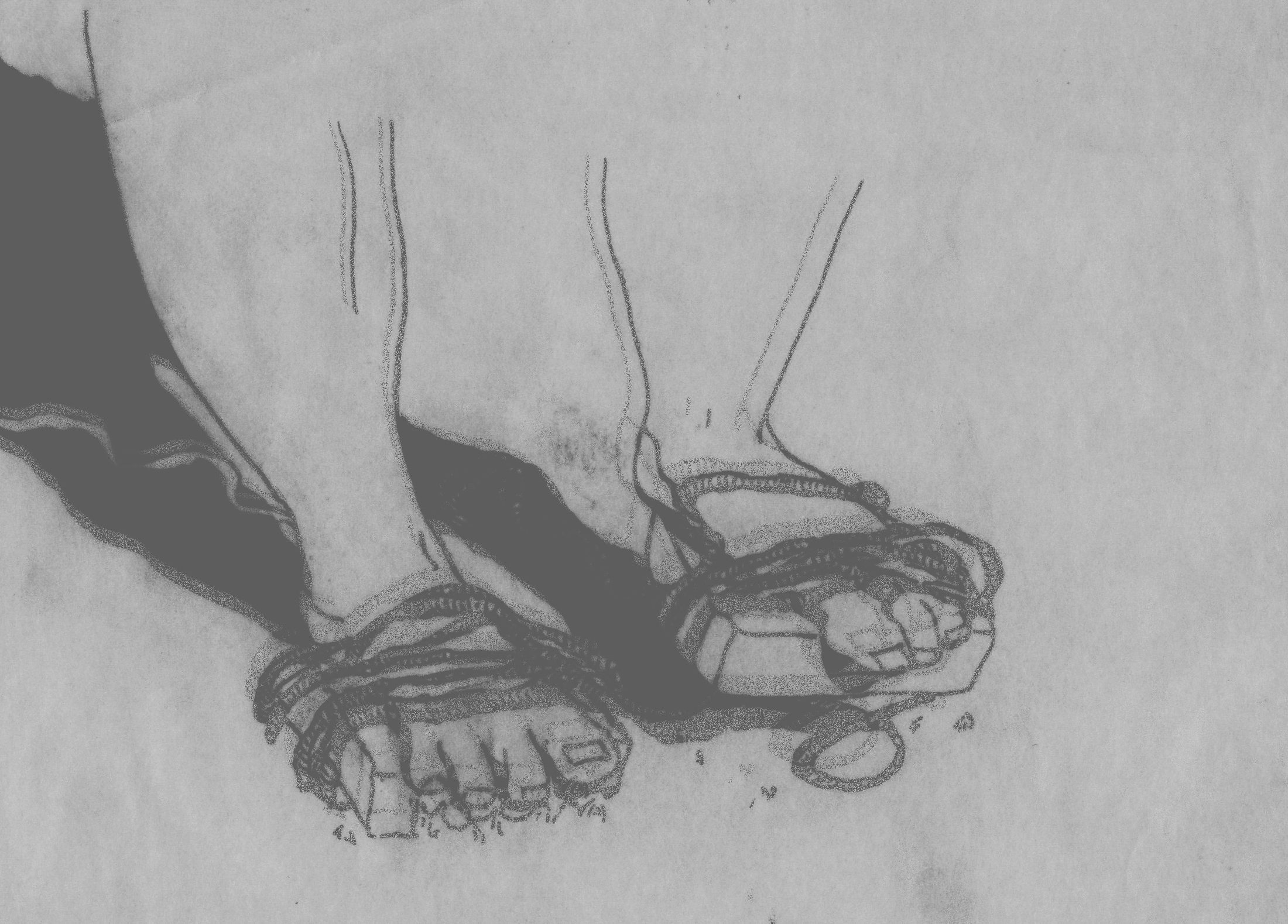
I constructed makeshift shoes by fastening bricks to my feet with ropes. The photoperformance unfolded through movement and the gradual untying of those bindings, ending with the feet released. Serial photographs recorded the progression from constraint to release. I translated the records into drawings on paper, then used transparency, graphic layers and compositional changes to explore how the action could become a visual trajectory.
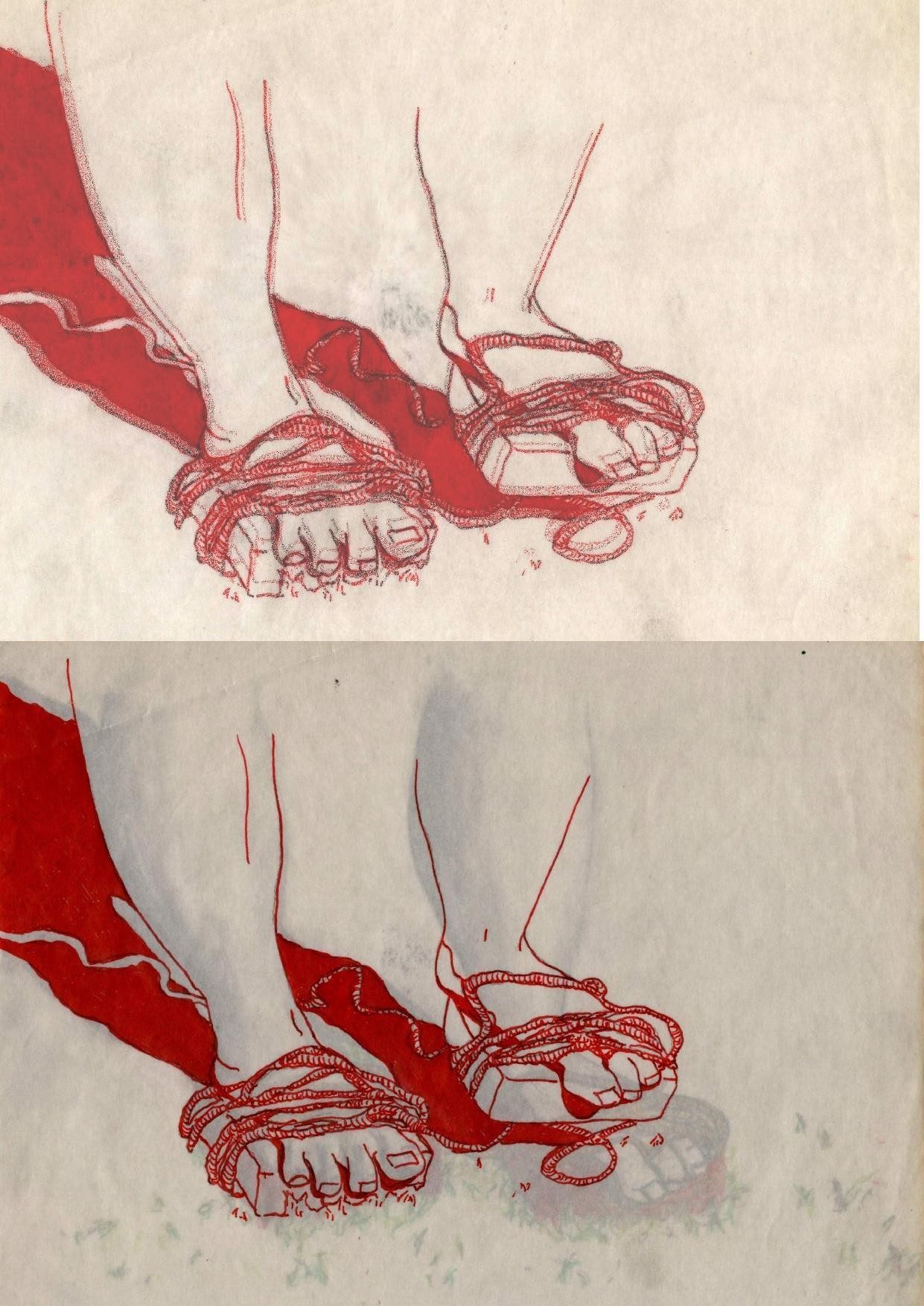
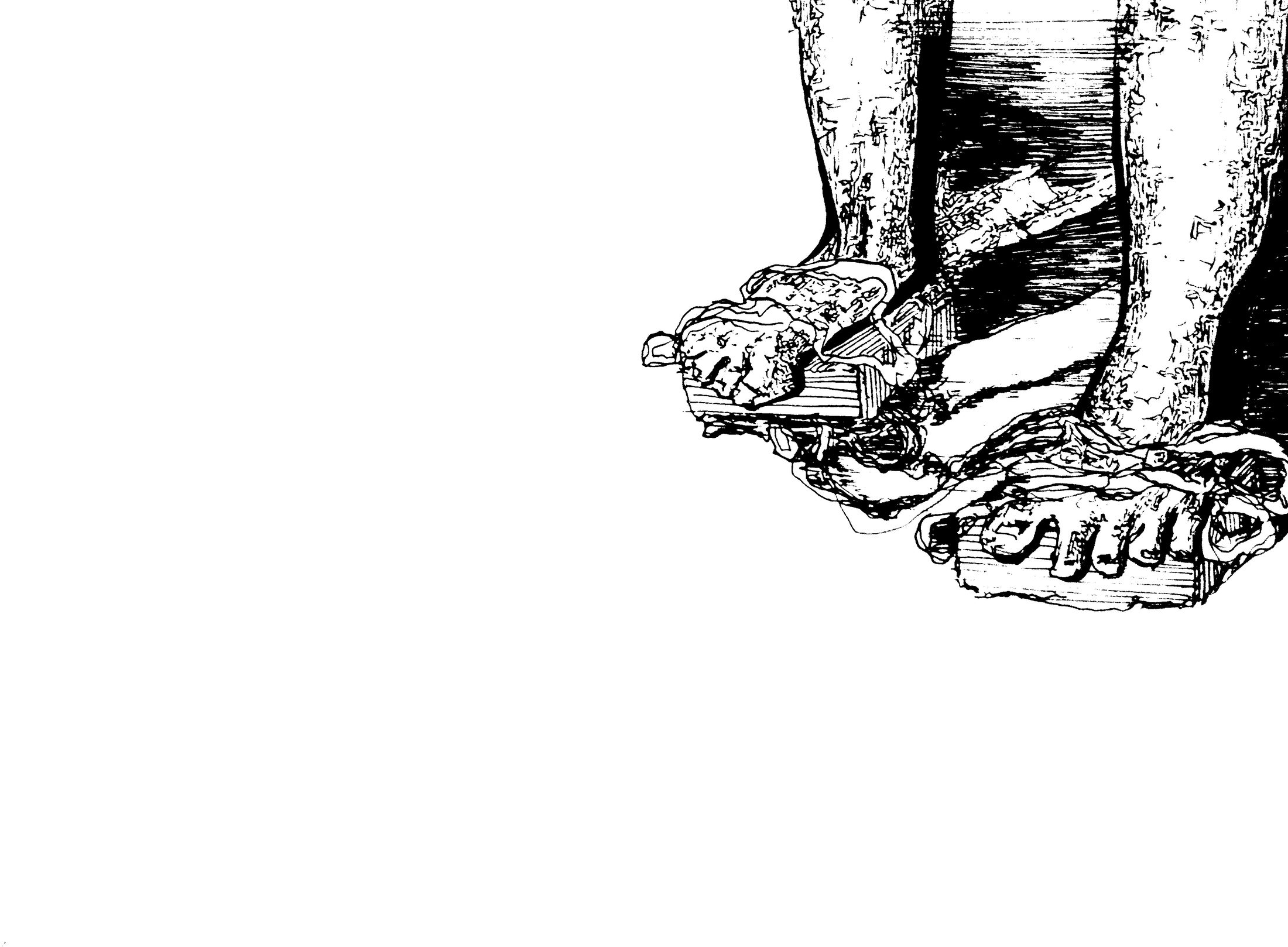
The resulting sequences move between burdened and freely moving feet, advance and retreat, lightness and weight. I developed the photoperformance, illustrations and digital editing as connected stages of the same enquiry. Material resistance remains present even as the gesture becomes an image that can be layered and rearranged. Made in 2019, Footprints contributes to Body.Interface, tracing how an embodied action changes through photographic capture, drawing and digital mediation without leaving the question of its physical weight behind.
Credits
Artist: Gina Marin
Read more · Research, process and context
About the work
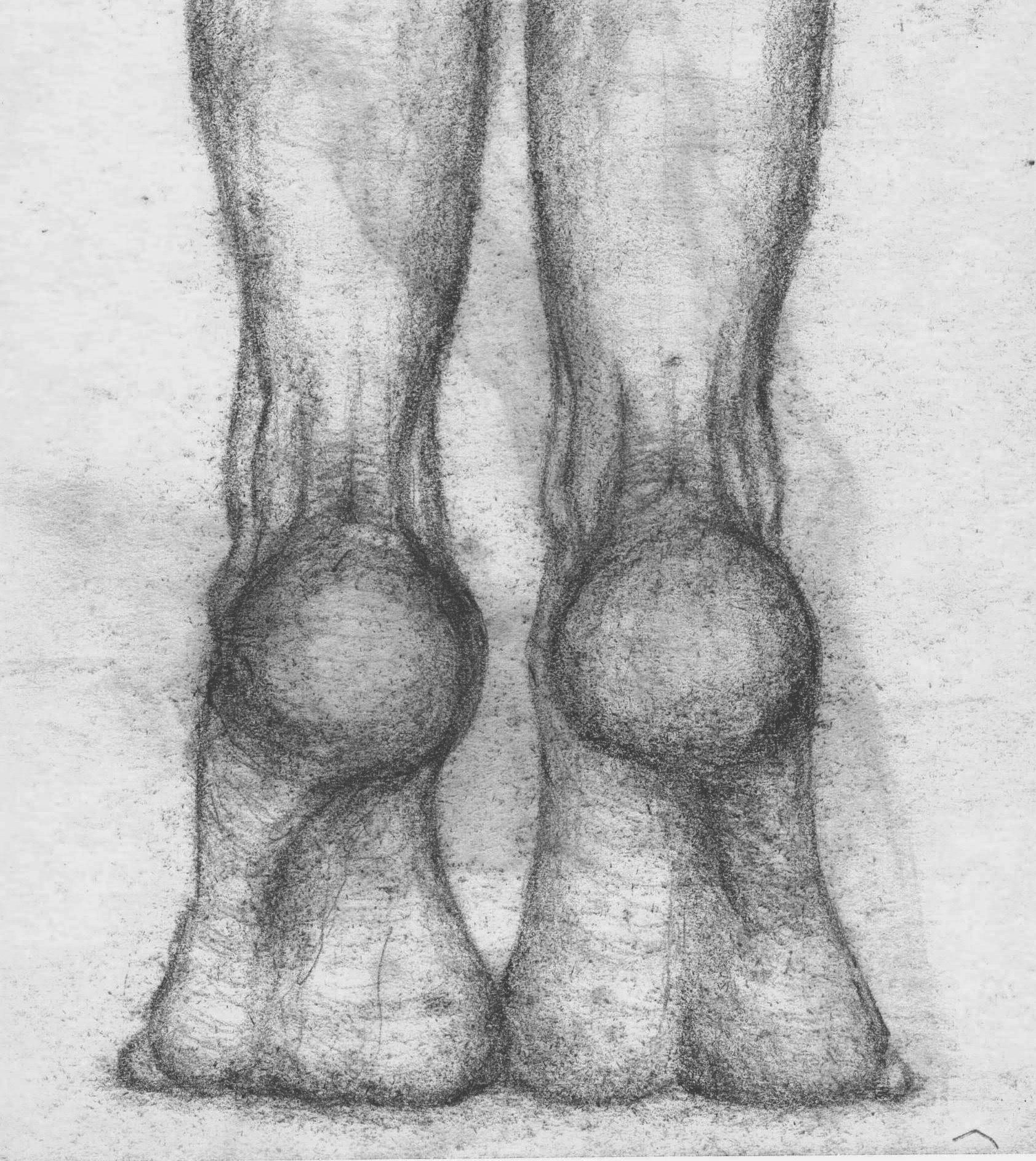
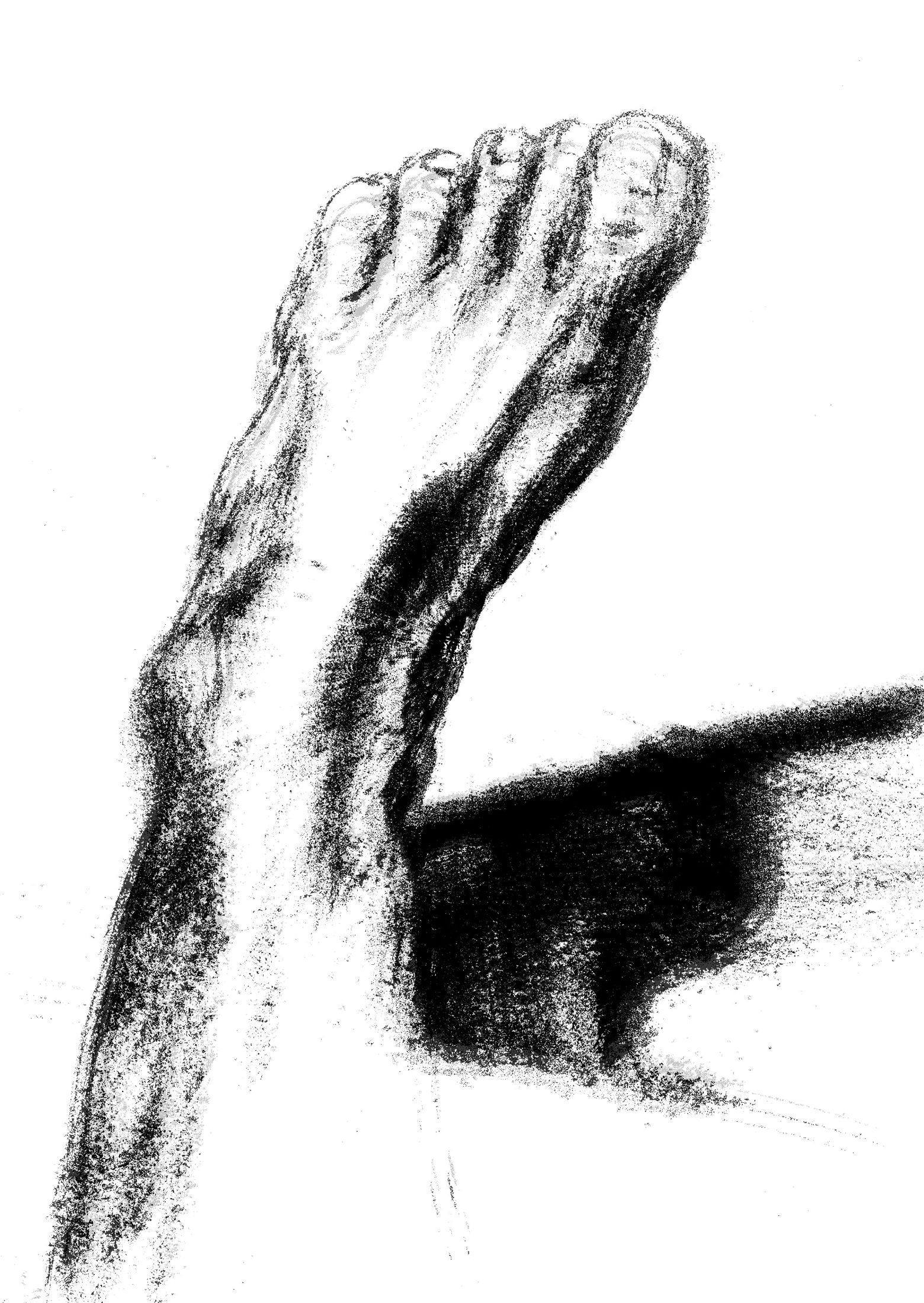
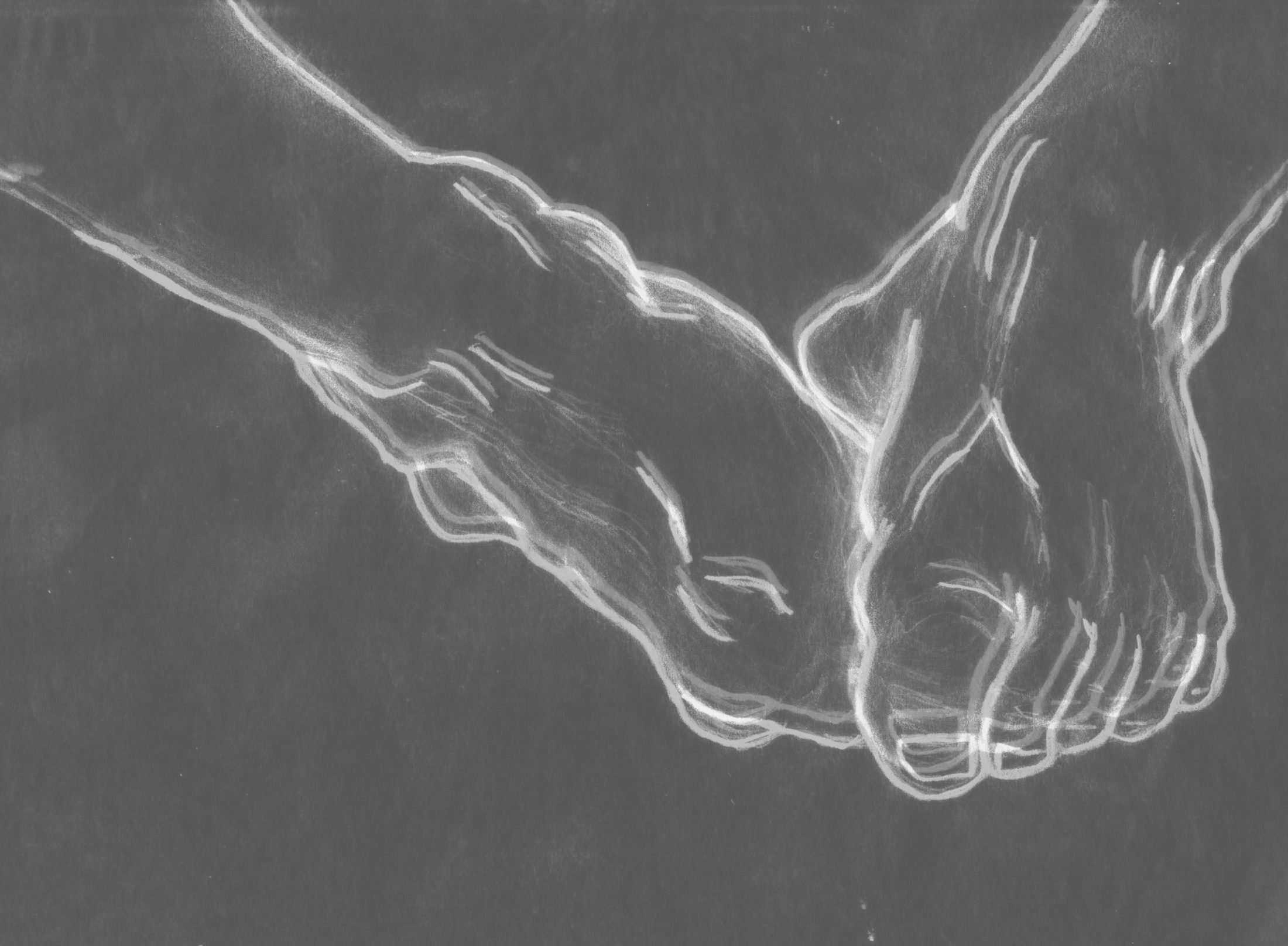
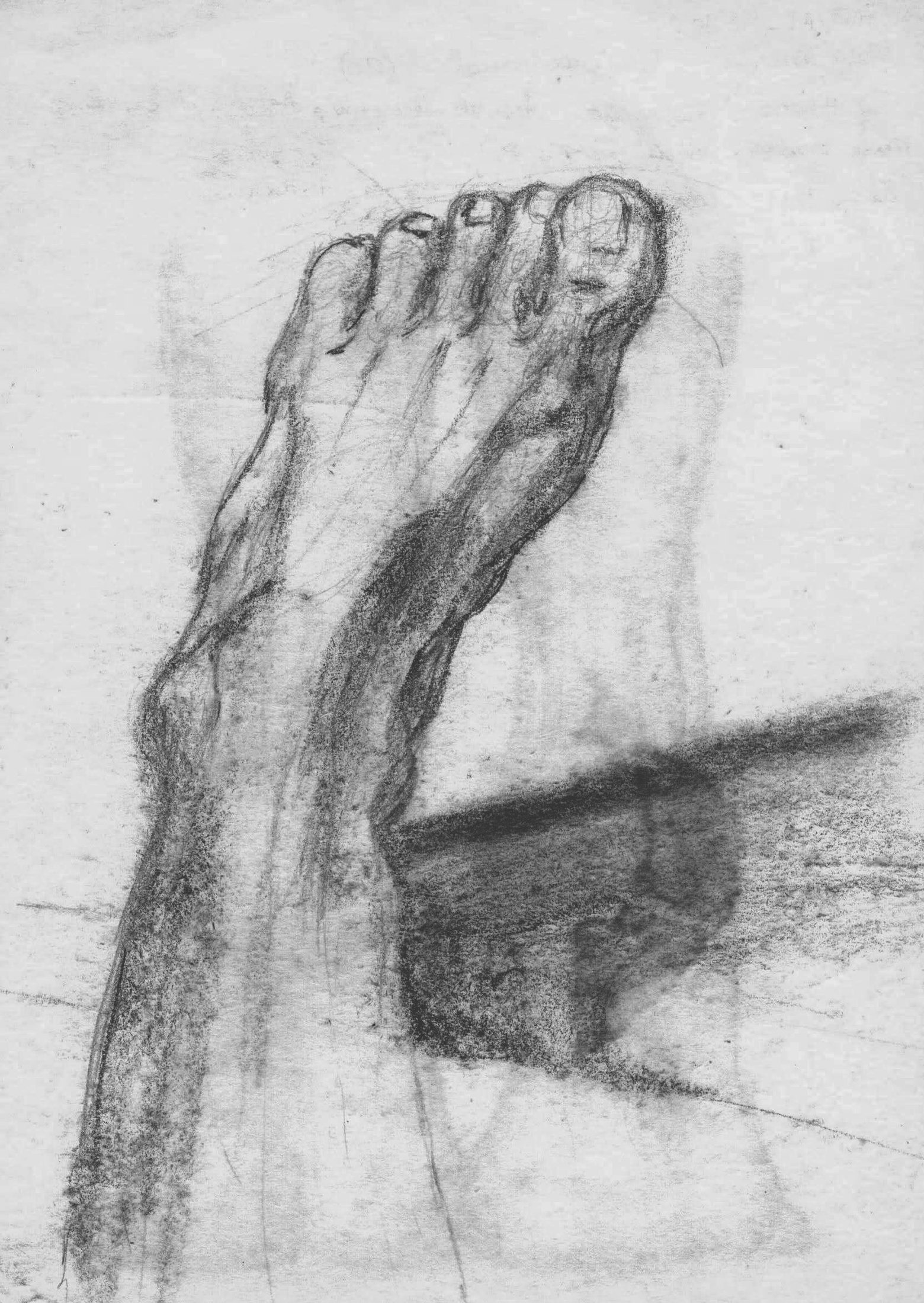
Footprints opens this sequence of illustrative investigations with a series of studies centred on the feet, understood as the body’s point of anchorage in the material world. Initially conceived as a photoperformance, the work used serial photographic captures to create a rhythmic sequence, approaching chronophotography or a movement study. These records were subsequently translated into drawings on paper.
The work is driven by an existential question: what does it mean to take a step in the material world when digital environments seem to offer a light, almost disembodied experience? In this sense, it enters into dialogue with Byung-Chul Han’s reflections (2012) on the erosion of worldly resistance in digital society: a frictionless hyperreality in which bodily presence loses its density.
From photoperformance to drawing
Developed within the Visual Narratives Laboratory, the series originated in a staged photoperformance. I first constructed makeshift brick shoes, fastening bricks to my feet with ropes. The action unfolded through movement and the gradual untying of the ropes, ending with the feet released from their bindings. Serial photographs documented this progression from constraint to release.
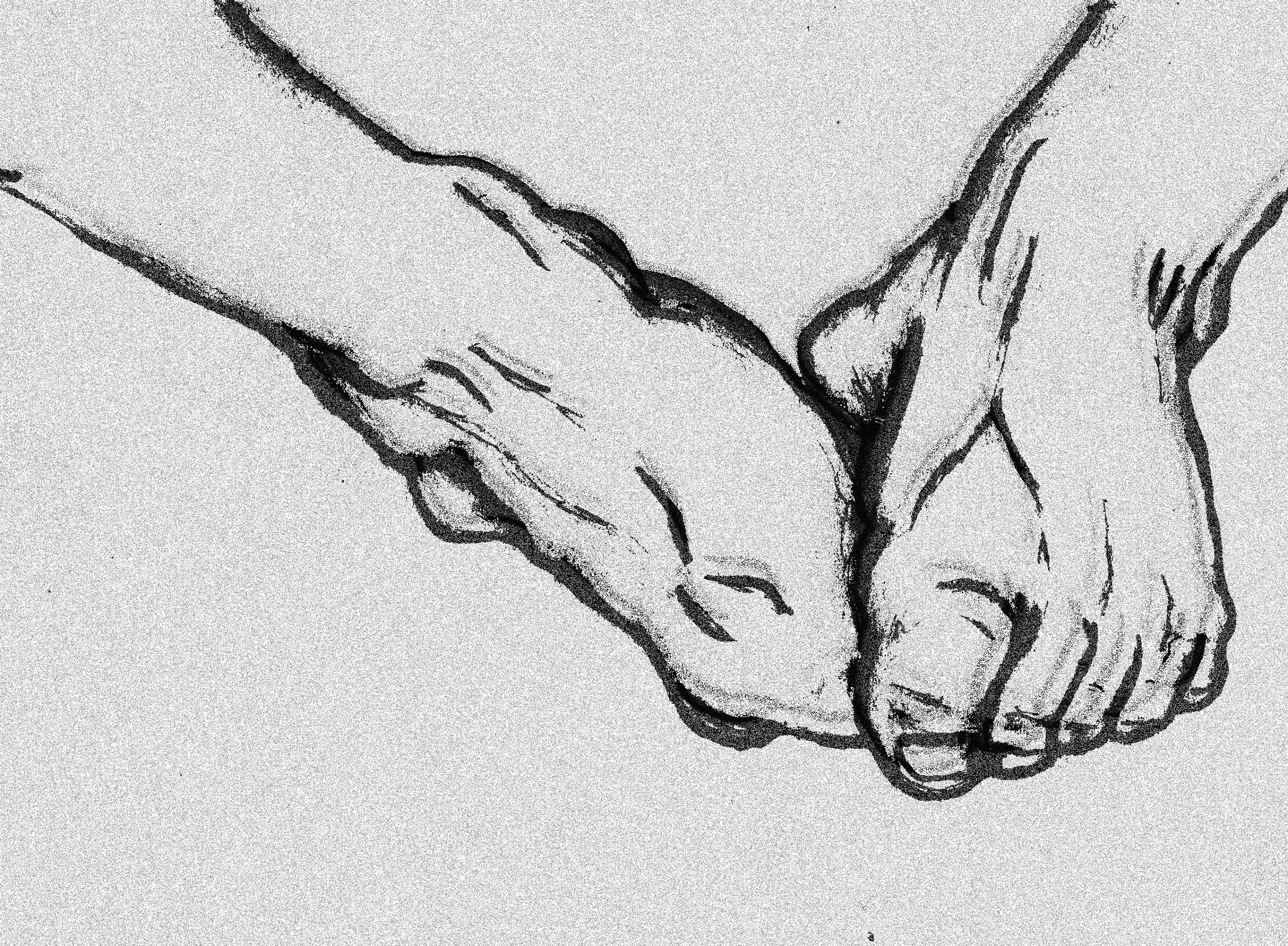
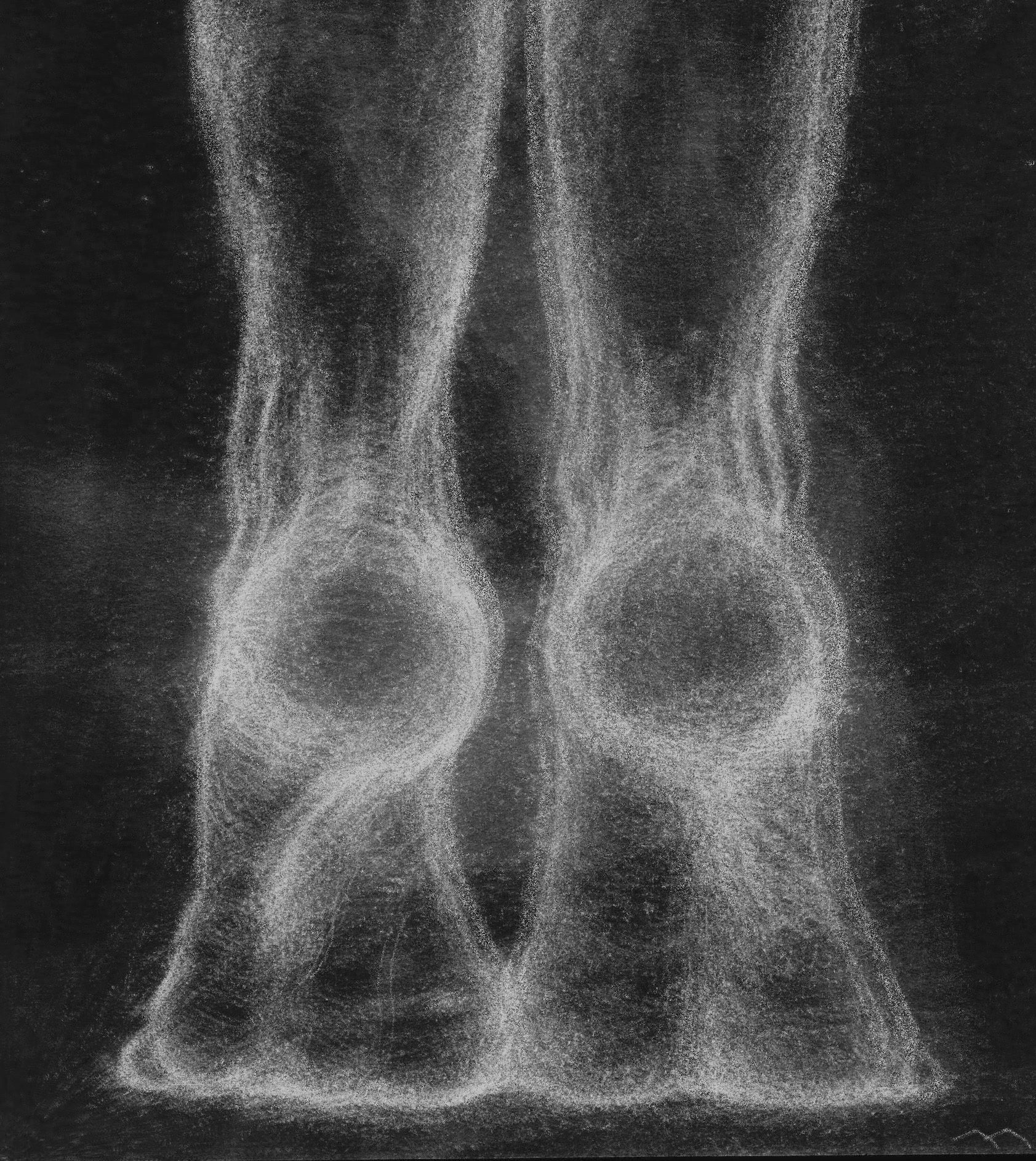
I translated these photographic records into drawings on paper, then developed the illustrated sequences into digital variations. Using transparency, graphic layers and compositional rearrangements, I explored how a physical gesture becomes a visual trace.
Footprints, 2019. Mixed media: photoperformance documentation, illustration and digital editing.
Between lightness and weight
My intention was to register how the body seeks to reassert its earthly presence, even as it risks becoming weightless in virtual space. A paradox emerges: while the foot dematerialises into a visual trajectory in digital environments, its physical footprint can feel heavy, carrying an almost inexplicable exhaustion, as though each step condensed the friction absent from virtual experience.
The performative action therefore moved between gestures of advance and retreat. Some sequences show bare feet moving freely; others show feet burdened by bricks tied with ropes. These contrasting actions give material form to the tension between lightness and weight, freedom of movement and the resistance of the ground.
Part of the research
This project is documented as an earlier stage of the enquiry developed in Body.Interface.